From Building Automation to Automated Buildings
Making buildings understandable, interoperable, secure and continuously improvable.
WINNIIO helps organisations move from fragmented building systems to secure, interoperable and increasingly automated buildings by connecting engineering, information, operational data, people and AI around the physical reality of the asset.
Few people anywhere have worked this problem from the sensor to the boardroom — from BACnet frames to national strategy — for as long as we have. At Go-IoT, that work spanned roughly 500 buildings across a portfolio. This is what being among the best in the world at building automation actually looks like: receipts, from 2018 onward — Cheating Death by 1000 Cuts (2018) and Wireless-First Strategy (2020), both on AutomatedBuildings.com.
Smart Buildings.
From indoor climate and room control to portfolio connectivity, BIM-to-operations and AI on the edge — smart buildings are where WINNIIO's methods were forged.
Building automation is no longer a silo.
What used to be a standalone controls discipline now touches every layer of the building and its portfolio.
Read moreShow less›
Strategy work for a leading BIM orchestrator — who wanted to take the next step in delivering information across the lifecycle, toward connected buildings, and needed a blueprint — identified the shift six years ago: hardware/software separation, open interoperable systems, standardised APIs, local control, cloud augmentation, wireless-first design, metadata and AI at the edge.
The harder problem was changing building behaviour without dependence on proprietary tools and vendors.
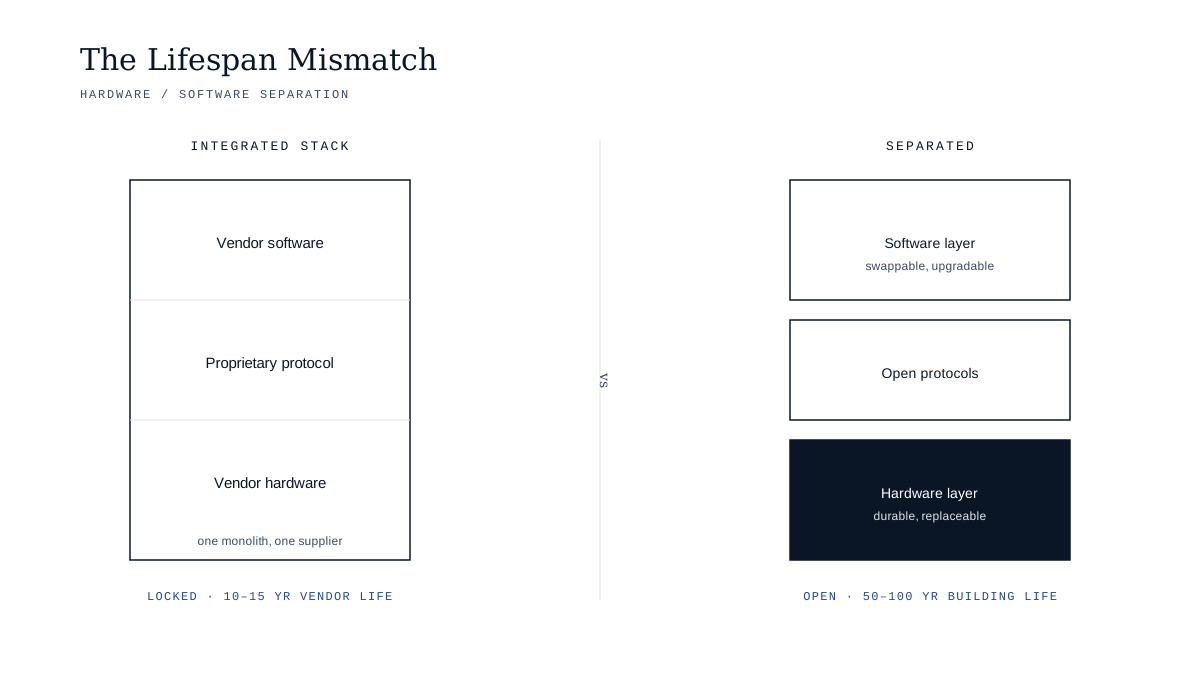
The building lifecycle.
Reverse-engineer from outcomes, not from a product list.
Read moreShow less›
- Start from the operational outcome the building needs to deliver, then work backward into systems architecture.
- Define interoperability, data ownership and automation ambition before procurement — not after.
- Set the taxonomy and tagging convention early; retrofitting it later is the expensive path.
Operationally ready, not construction-complete.
Read moreShow less›
- Construction-complete and operationally ready are different milestones — commissioning must prove the latter.
- BIM-to-BAS handover with verified point lists, not just as-built drawings.
- Cybersecurity and network segmentation designed in from day one, not bolted on at close-out.
Pragmatic modernisation over rip-and-replace.
Read moreShow less›
- Retrofit connectivity and interoperability onto legacy BAS without forcing a full system replacement.
- Prioritise the systems and data points that unlock the next decision, not the ones easiest to sell.
- Wireless-first sensing to close data gaps cheaply where wiring is cost-prohibitive.
The twin is a working tool, not a one-off deliverable.
Read moreShow less›
- Continuous commissioning: the building is monitored and re-tuned, not just handed over and left.
- Feedback loops from operations back into design standards for the next project.
- AI recommendations grounded in real operational and engineering context — not generic building benchmarks.
Practical experience, not theory.
Product owner and PM for Swegon WISE and Indoor Climate Designer — applications used to design indoor-climate solutions for hundreds of buildings, spanning wireless mesh sensing and hardware/software coordination.
Read moreShow less›
Styrprojektering (controls engineering design) experience covers design, architecture and review depth; formal inspection sign-off is a more limited part of that scope. WINNIIO does not claim one person should replace every specialist — the value is in connecting the specialists around a shared, interoperable picture of the building.
BACnet, IoT and portfolio connectivity.
At Go-IoT, connectivity work spanned roughly 500 buildings across a portfolio — BACnet over web services, the edge-to-cloud chain, and semantic tagging to make that data usable at scale.
Read moreShow less›
Public record from that period:
- Cheating Death by 1000 Cuts — AutomatedBuildings.com, 2018
- Wireless-First Strategy — AutomatedBuildings.com, 2020
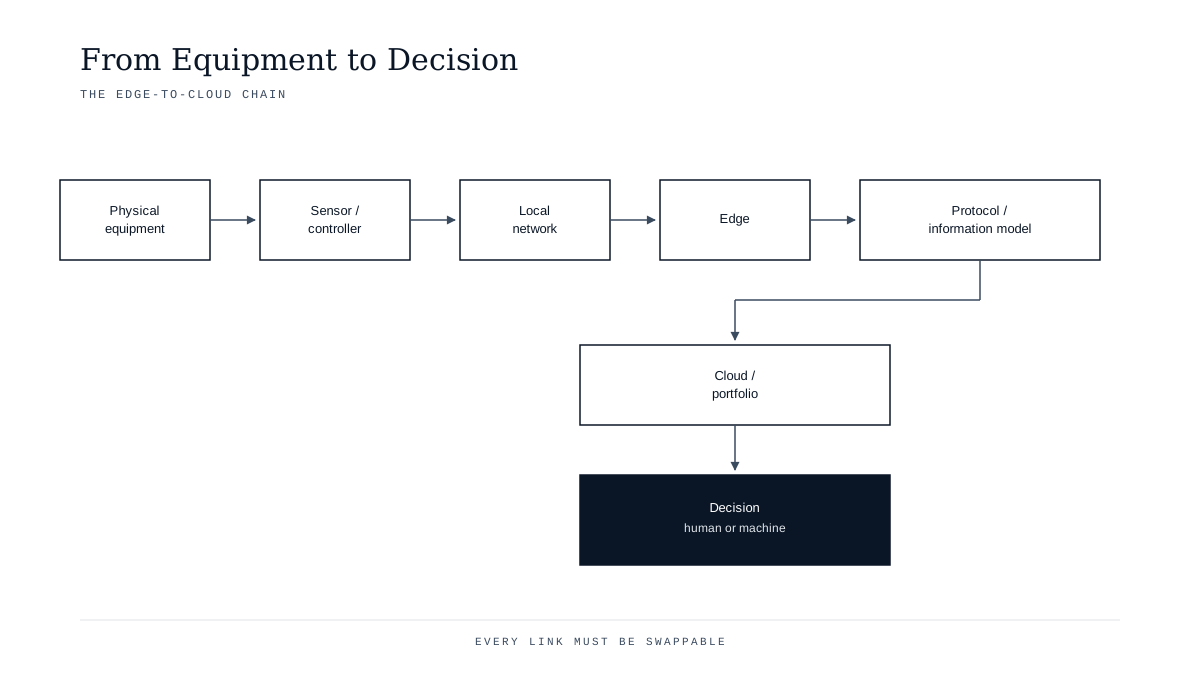
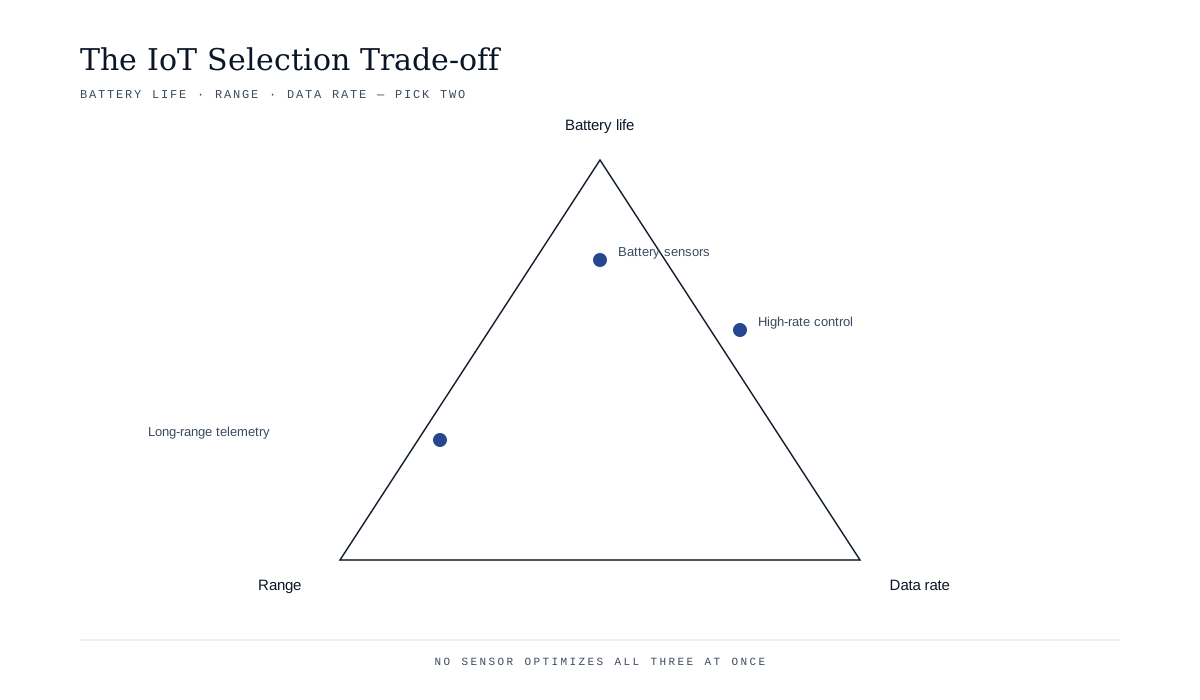
Wireless-first, but fit for purpose.
Wireless-first where it improves deployment, flexibility and lifecycle economics. Wired where safety, latency, reliability, power or operational criticality requires it. Open and interoperable in both cases.
BIM, CIM, GIS and operational context.
Four roles, one shared reality: BIM sets design context, GIS/CIM sets the wider context, automation carries operational state — the twin is what connects them.
Read moreShow less›
The EU Construction Products Regulation points toward interoperability with BIM as part of how construction product information should be exchanged — Regulation (EU) 2024/3110.
Taxonomies, ontologies and a shared building language.
22.4 is not just a number — without a shared tag, it could be a temperature, a flow rate or a fault code. Taxonomy is what turns a raw point into meaning.
Digital twins as operational boundary objects.
A twin has to work across roles that don't share a vocabulary — facilities, engineering, IT, security, sustainability. It spans those stakeholder boundaries by giving each of them a shared, queryable representation of the same physical reality.
AI with engineering context.
Read moreShow less›
The EU AI Act (Regulation (EU) 2024/1689) frames the direction: explainability, boundaries, and human authority before autonomy.
Cybersecurity and post-quantum readiness.
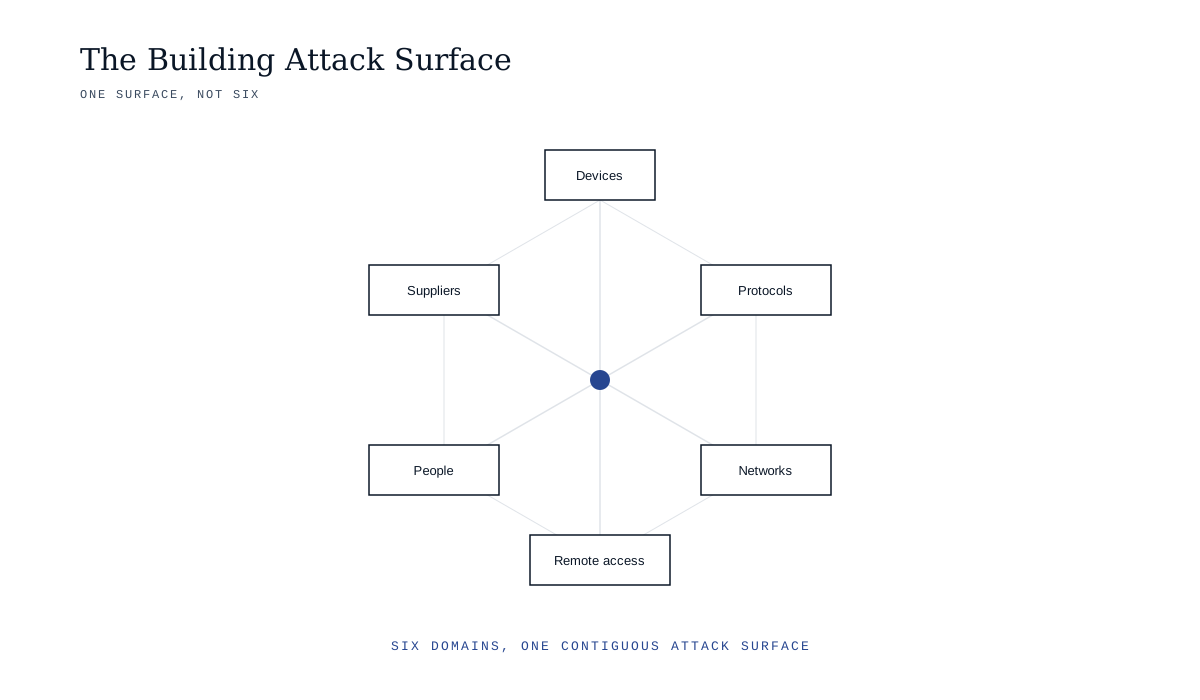
You must know what exists, how it is connected and who can access it before it can be protected.
Read moreShow less›
That principle came out of the same engagement's security work. It maps directly to NIS2 and the Cyber Resilience Act — and to cryptographic agility for buildings whose systems outlive the crypto they were built with.
European regulatory direction.
Read the regulatory mapShow less›
- EPBD — Energy Performance of Buildings Directive
- Data Act
- EU Taxonomy — Building Automation and Control Systems
Building automation becomes the operational evidence layer connecting regulation, sustainability, energy, resilience and customer outcomes.
What WINNIIO delivers.
Building automation and automated-building strategy, reverse-engineered from outcomes.
BACnet, IoT and portfolio-wide connectivity design across hardware and software layers.
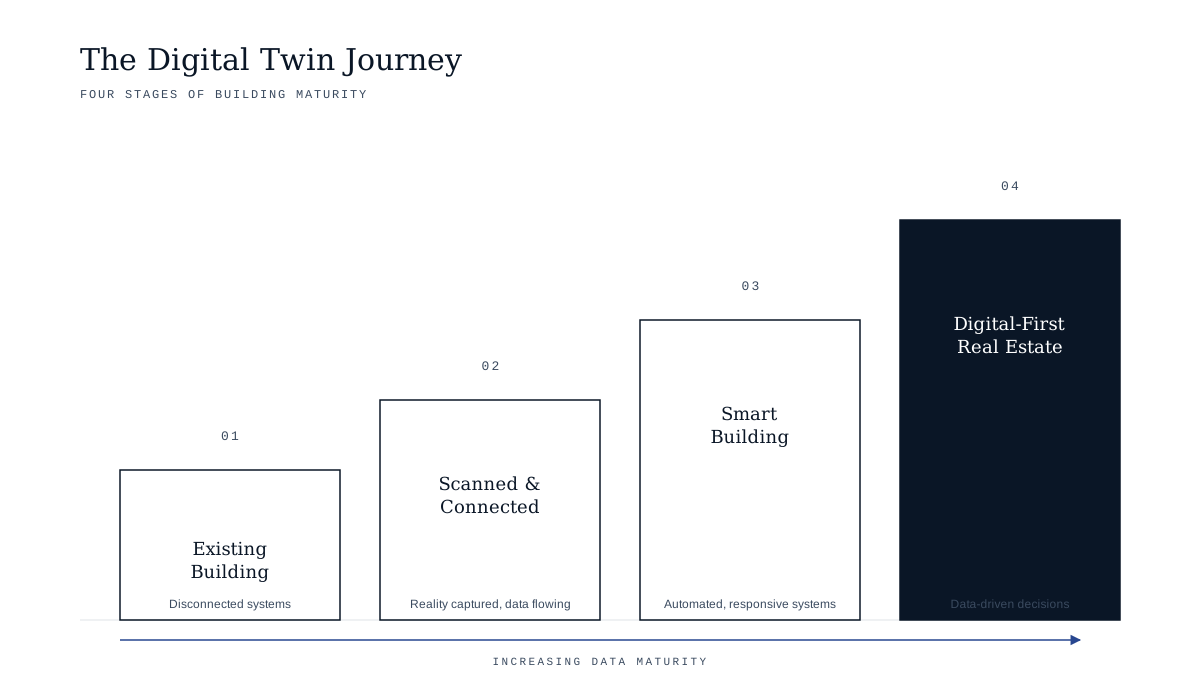
A staged path from status monitoring to closed-loop, human-orchestrated automation.
Connecting design-time BIM context to live operational and automation data.
Assessing whether your building data and systems are ready for AI with engineering context.
Cybersecurity and post-quantum readiness for systems that outlive their crypto.
Shaping building-automation products and offerings with real deployment experience.
Changing building behaviour without dependence on proprietary tools and vendors.
Designing the collaboration arena between vendors, operators and standards bodies.
Every offer above follows the same staged path — see the full twin maturity ladder on /method for where each stage compounds.
Two field guides, free.
The working material behind everything above — the protocol trade-offs, the integration traps, and the route from a building you cannot read to one that answers questions.
Field guide · 35 pages
Building Automation UnderstandingBACnet and Modbus in practice, local control vs the cloud, metadata standards, and why the data strategy decides what a building can ever become.
Field guide · 23 pages
Intelligent Buildings ApproachSeparating hardware from software as the north star — three routes to smarter buildings: new construction, existing systems, and buildings with no logic at all.
Connect reality. Understand context. Test decisions. Improve outcomes.
Nobody brings the full stack of digital twin competence — organizational, global, change management, technology strategy, and a NASA JPL-derived method — the way we do. We bring the best people together for a company faster than anyone else, and we implement it with them.
Competitors are not waiting for certainty. They are building the place where certainty gets cheaper.
Scoping workshop from €4,500, credited in full against the project. See how scoping works